PhD Researcher of CREATE Project Attends Global Fashion Summit 2026 in Copenhagen
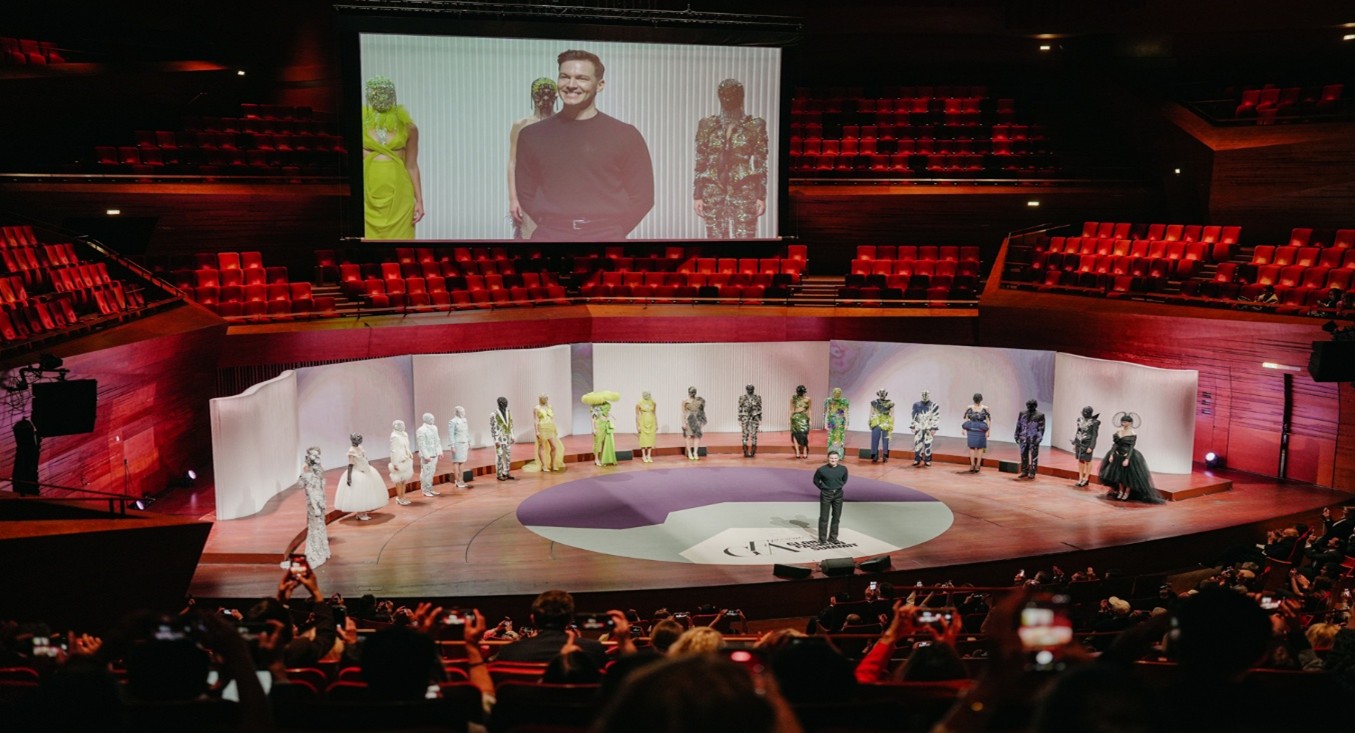
Image credit: Global Fashion Agenda. Source: Global Fashion Summit Media Bank.
A PhD researcher, Md. Faik Hamza Faruqui, from CREATE Project attended Global Fashion Summit: Copenhagen Edition 2026, organized by Global Fashion Agenda, as a participant following current international discussions on circular fashion, sustainability transitions, and value-chain transformation.
The Summit took place from 5–7 May 2026 in Copenhagen under the theme “Building Resilient Futures”. The event brought together stakeholders from across the fashion value chain to discuss the environmental, social, regulatory, and industrial challenges facing the sector.
Participation in the Summit was closely connected to CREATE’s research on circular economy transition in Bangladesh’s apparel industry and its links to wider global fashion value chains. As Bangladesh remains deeply embedded in international apparel production networks, debates on circularity, resilience, policy alignment, supplier inclusion, recycling infrastructure, and sustainable innovation are directly relevant to the project’s research agenda.
During the Summit, the PhD researcher attended sessions addressing issues such as Scaling Innovation: Next Gen and Low Impact Materials and AI for Supply Chain Optimization. These panels offered useful insights into how new fibers and innovations are being tested and scaled to upgrade the current unsustainable production cycle into a more circular one. They are responses to sustainability pressures and were particularly noteworthy regarding how circular economy transitions depend on coordination among brands, suppliers, policymakers, civil society, technology providers, and supporting institutions.
A key observation from the Summit was that circular innovation requires more than technological change alone. Among the several innovative startups was ThreadBridge, a Bangladesh-based initiative selected among the Top 20 finalists for the H&M Foundation Global Change Award 2026. ThreadBridge is developing an AI-assisted quality-control system that uses wearable smart glasses and machine learning to detect fabric defects before cutting, helping factories reduce pre-consumer textile waste while integrating into existing production workflows. These issues are highly relevant to CREATE’s work on Bangladesh’s apparel value chains, where circular transition involves not only firms and factories, but also workers, small and medium-sized enterprises, recyclers, policymakers, and international buyers. There was extensive exchange of ideas and dialogue between the PhD researcher Md. Faik Hamza Faruqui and Co-Founder of ThreadBridge Md. Ridwan Hossain.
Insights from the Summit will inform CREATE’s continuing research, stakeholder engagement, and dissemination activities on circular economy transition in Bangladesh’s apparel value chains.